
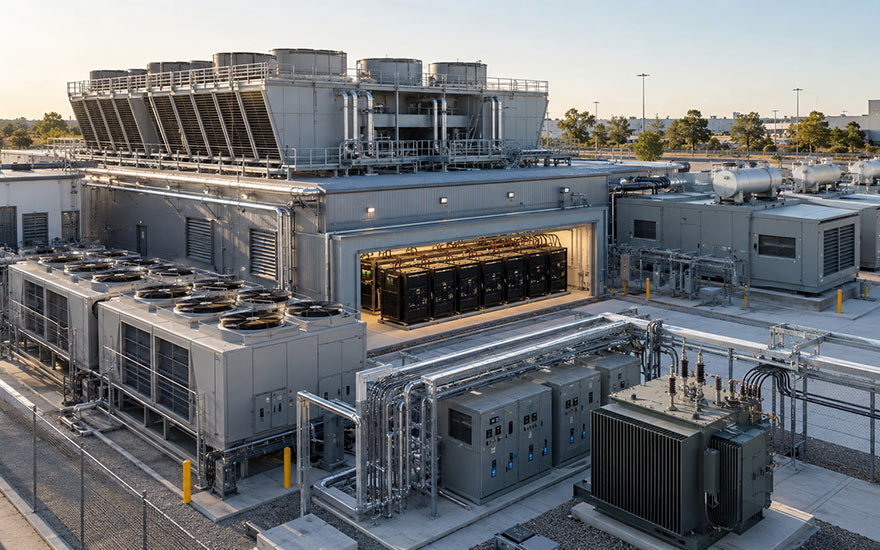
Recent headlines have made the vulnerability of electrical infrastructure difficult to ignore.
A single substation failure can interrupt airports, businesses, homes and digital services. Extreme heat can strain generation and cooling resources. In areas experiencing military strikes, substations, power plants and other energy infrastructure may become direct targets, leaving critical facilities without dependable utility power.
At the same time, artificial intelligence, cloud computing and large-scale data processing are driving demand for more data centers—and significantly more electricity. These facilities depend on utilities, substations, cooling systems, controls and backup generators that must operate as one resilient system.
This growing dependence on power creates an important connection between high-altitude electromagnetic pulse protection, or HEMP protection, and electromagnetic compatibility, or EMC.
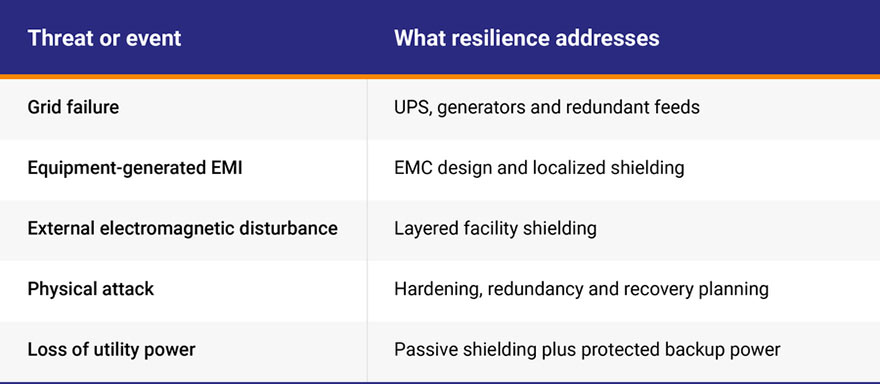
Today’s Power Outages Are a Critical-Infrastructure Reality
Power loss is not a theoretical scenario. It can result from aging equipment, fire, severe weather, grid instability, cyber incidents, accidents or physical attacks.
The 2025 substation fire that disrupted Heathrow Airport demonstrated how a localized electrical failure could create far-reaching operational consequences. Data centers affected by that incident reportedly continued operating on backup generators, illustrating both the importance of redundant power and the need for that backup infrastructure to function reliably.
In active conflict areas, attacks on power plants and substations have repeatedly caused widespread outages. These events are not the same as HEMP, but they reinforce the same engineering reality: critical operations cannot depend on one power source or one protective layer.
Resilience requires reliable primary power, protected backup power, redundant controls and an electromagnetic boundary that remains effective during the transition.
Understanding the HEMP and EMC Connection
HEMP protection addresses the electromagnetic effects that could result from a nuclear detonation at high altitude. EMC focuses more broadly on ensuring that electrical and electronic systems operate correctly without creating or suffering unacceptable electromagnetic interference.
The severity and design requirements may differ, but both involve controlling how electromagnetic energy enters, leaves and travels through a facility.
For a data center, utility control building, military operations center or secure communications facility, the concern is not limited to individual electronics. Doors, ventilation systems, power conductors, cable penetrations and generator controls can all become potential pathways.
Effective protection therefore requires layers.
Creating Multiple Layers of Electromagnetic Protection
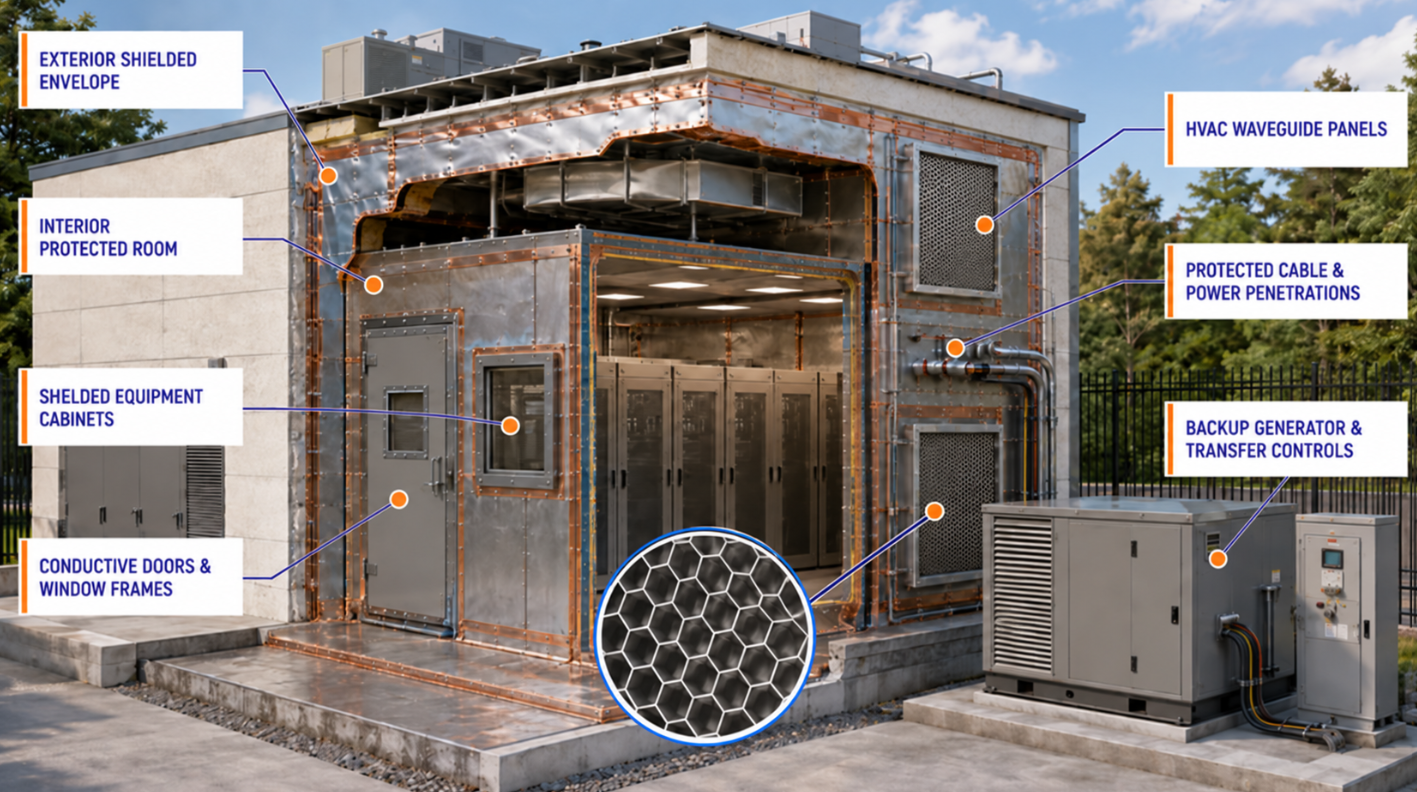
A layered strategy may begin with the exterior building envelope and continue inward toward the most sensitive equipment. Depending on the application, these layers may include:
- A shielded building or protected room
- Shielded equipment cabinets and control enclosures
- Conductive doors and access panels
- EMI gaskets and conductive silicone
- Shielded windows and conductive window frames
- Honeycomb ventilation panels and HVAC waveguides
- Protected power, communications and cable penetrations
- Shielded generator controls and transfer equipment
Each layer contributes to the continuity of the electromagnetic boundary. The objective is to keep disruptive energy out, control electromagnetic emissions from within and prevent openings from becoming leakage paths.
When an Entire Building Becomes a Shielded Enclosure
SCIFs, or Sensitive Compartmented Information Facilities, are government-accredited spaces designed to protect classified information. Depending on their requirements, they may incorporate RF shielding, protected power, shielded doors and treated ventilation openings.
Not every shielded room, data center or utility building is a SCIF. However, large critical facilities can present similar enclosure challenges.
A power-substation control building, military command facility or data center may require shielding across multiple rooms or throughout the complete structure. In practical terms, the building begins to function as one large shielded enclosure—sometimes resembling a giant SCIF in scale, although it may not carry the SCIF designation.
Doors, Windows and HVAC Are Part of the Shield
A shielded wall alone cannot protect a facility. Every door, window, ventilation duct and utility penetration creates a potential break in electrical continuity.
Conductive silicone and EMI gaskets help maintain contact around doors, removable panels and equipment access points. Shielded window systems preserve visibility without leaving an uncontrolled opening in the enclosure.
HVAC systems are especially important for data centers, utility buildings and generator rooms. These environments produce substantial heat and require continuous airflow. Honeycomb waveguide panels and HVAC waveguides allow ventilating air to pass while attenuating electromagnetic energy.
The design must balance shielding effectiveness with airflow and pressure drop. Protection cannot come at the expense of the cooling required to keep critical equipment running.
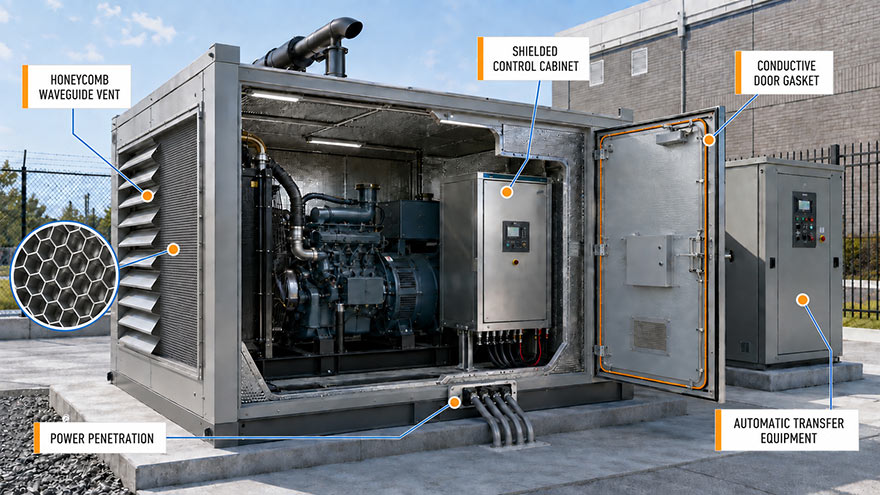
Backup Generators Also Need Protection
Backup generators are essential during grid failures, but installing a generator does not guarantee resilience.
Generators depend on electronic controllers, sensors, automatic transfer switches and connected power systems. These components may need protection from electromagnetic disturbances. At the same time, generator operation can produce electromagnetic noise that must be controlled around sensitive electronics and communications.
Generator enclosures may therefore require shielding at doors, control panels, ventilation paths and electrical penetrations. The solution must preserve combustion air, engine cooling and exhaust performance while protecting the systems responsible for delivering emergency power.
Passive Shielding Keeps Working When Power Goes Down
Properly designed shielding offers an important advantage: its primary protection is passive.
Conductive walls, shielded doors, EMI gaskets, window frames and honeycomb waveguides do not need electrical power to maintain the physical electromagnetic boundary. When utility power fails, these components remain in place while batteries, uninterruptible power systems or generators support continued operation.
For data centers, utilities and military facilities, resilience depends on this combination of passive shielding and protected backup power.
Frequently Asked Questions
Subscribe
Data Sheet Download

Data Sheet Downloads -
Click Here For All Our Data Sheets